
Livelihood Impact Fund launches Global Vision Impact Award, inviting governments to scale the world’s most overlooked public health win
Catalytic funding to help 15 governments deliver eyeglasses — and unlock billions in lost productivity


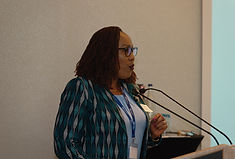
Left: Abigail Steinberg, Executive Director of Livelihood Impact Fund Eyeglasses Initiative
Right: Dr. Mary Ann Etiebet, President and CEO, Vital Strategies speaks with panelists Dr. Oteri Okolo, National Coordinator, National Eye Health Programme, Nigeria Federal Ministry of Health & Social Welfare; Julius Mbeya, Co-CEO, Lwala Community Alliance; and Mallika Raghavan, Deputy Chief Program Officer, Last Mile Health
Geneva, Switzerland, May 19, 2026—Today during the 79th World Health Assembly, Livelihood Impact Fund launched the Global Vision Impact Award, a transformative funding opportunity to turn one of the world’s most overlooked global health challenges into one of its greatest economic wins. Livelihood Impact Fund is seeking 15 government partners to collaborate in delivering glasses to hundreds of millions of people with presbyopia, and is collecting initial expressions of interest through a simple web form.
Age-related near-vision impairment, or presbyopia, affects over 1.8 billion people worldwide. Without access to reading glasses, 800 million people are prematurely withdrawing from their work, their craft, and their families. Left untreated, uncorrected presbyopia drains over $50 billion from low- and middle-income countries each year as a result of productivity losses. Despite its high burden, presbyopia is one of the most neglected development and global health challenges, particularly in low- and middle-income countries.
“Near-vision impairment is silently stealing sight from millions and costing economies billions — and the fix costs less than a dollar per person,” said Abigail Steinberg, Executive Director of Eyeglasses Initiative at the Livelihood Impact Fund. “What’s missing isn’t the science or the supply. It’s the upfront capital to build a national program. That’s exactly what this award will deliver. We are excited to partner with governments around the world to help close the vision gap and deliver eyeglasses to millions of people, and are looking forward to meeting with governments interested in joining.”
Fortunately, presbyopia is one of the most solvable global challenges. It requires no surgery, no specialized facility, and no complex supply chain. A ready-made pair of reading glasses corrects the issue and costs less than $1 to make. Community workers with basic training can screen patients and distribute ready-made reading glasses at minimal cost.
Through the Global Impact Vision Award, Livelihood Impact Fund invites governments to address the gap and save their countries billions in lost productivity. The award will provide the required up-front investment, covering the short-term costs of building supply chains, training community providers, educating the public, and establishing the policy frameworks that allow near-vision care to function as a public good. Once those foundations are in place, the returns to the economy are significant: every $1 invested in eye health yields $28 in economic returns.
As part of the award, selected governments will receive:
-
Up-front technical assistance, capacity building, and policy design support from Livelihood Impact Fund and Vital Strategies
-
Catalytic philanthropic funding and private sector investment to implement policy changes and launch near-vision programs for national scale
As part of the launch, Vital Strategies, the Clinton Health Access Initiative, Last Mile Health, Lwala Community Alliance, the World Health Organization, and the International Agency for the Prevention of Blindness today joined an over-subscribed venue with the Livelihood Impact Fund and government officials from Kenya, Cambodia, the Dominican Republic, and Nigeria to spotlight how governments of Ethiopia, Kenya, and Nigeria are scaling near-vision care through their public health systems — showcasing a proven, cost-effective intervention already de-risked and ready for national adoption.
Studies demonstrate that reading glasses can boost worker productivity by more than 20% and raise individual income by more than 30%. Scaled up, low-cost interventions to address presbyopia could deliver US$1.05 trillion in global productivity gains by 2050.
"It's rare to find an intervention this simple and this consequential,” said Dr. Neil Buddy Shah, CEO of the Clinton Health Access Initiative. "A pair of reading glasses costs under a dollar to produce and can raise an adult's income by a third; restoring their ability to work, to earn, and to care for their family. The opportunity now is for governments to scale what already works."
“The Global Vision Impact Award will lead to hundreds of thousands of people living with presbyopia regaining agency and living healthier lives,” said Dr. Mary-Ann Etiebet, President and CEO of Vital Strategies. “Awarded governments will be funded to close the vision gap with long-term policy solutions and will gain enormous health and economic improvements from this simple and low-cost, transformative tool: reading glasses. We urge Ministers of Health to learn more about this opportunity."
About the Global Vision Impact Award
Government applications are open now.
Governments are invited to register their interest HERE.
More information can be found HERE.
###
About the Livelihood Impact Fund
The Livelihood Impact Fund invests in high-leverage interventions that seek to increase people's ability to support themselves and their families by providing them with skills, capital, and opportunities. Eyeglasses Initiative is its flagship effort to make corrective near-vision care accessible to every adult who needs it.
About Vital Strategies
Vital Strategies is a global health organization that believes all people should be protected by strong and equitable health policies and systems. We partner with governments, communities and organizations around the world to reimagine public health so that health is supported in all the places we live, work and play. The result is millions of people living longer, healthier lives around the world. To find out more, please visit www.vitalstrategies.org or follow us on LinkedIn.
Watch partner videos played during the event here.



Left to Right: Dr. Stuart Keel, Technical Officer, Vision and Eye Care Programme, Department of Noncommunicable Diseases, WHO
Ms. Mary Mwiti, Chief Executive Officer, Kenyan Council of Governors
Dr. Neil Buddy Shah, CEO of the Clinton Health Access Initiative
Peter Holland, Chief Executive, International Agency for the Prevention of Blindness (IAPB)
***


Nigeria expands Presidential Eye Health Initiative to reach another 1 million people across 21 states in 2026
Jigi Bola 2.0 demonstrates an integrated primary healthcare model that delivers results at scale

Abuja, Nigeria, February 10, 2026–A proven model for integrating eye care into primary health systems is scaling across Nigeria. Livelihood Impact Fund, the Clinton Health Access Initiative, and Vital Strategies today announced their support for the Nigerian government’s expansion of the Presidential Initiative Jigi Bola 2.0 to a total of 21 states, building on first-year success that delivered reading glasses to over a million people. The expansion aims to reach an additional million Nigerians by the end of 2026, demonstrating what is possible when vision care is embedded in primary healthcare.
Partners joined the Honourable Minister of State for Health and Social Welfare Dr. Adekunle Salako, Special Adviser to the President on Information and Strategy Mr. Bayo Onanuga, and the National Coordinator for the National Eye, Ear, and Sensory Functions Health Programme Dr. Oteri Eme Okolo to share major progress on the initiative. Through Jigi Bola 2.0, primary healthcare workers are trained to provide vision screenings and ready-to-wear reading glasses, with the goal of reaching five million Nigerians by 2027. In just one year, the program screened 1.5 million Nigerians and provided 1.3 million people with free eyeglasses across 16 states. The majority of recipients—over a million—received their glasses through the primary health system. The next phase of Jigi Bola 2.0 will expand integrated eye care services to 8 additional states, aiming to reach another million Nigerians with eyeglasses in 2026.
Most adults over 40 require reading glasses due to presbyopia, an age-related condition affecting 1.8 billion[1] people globally—including an estimated 25 million Nigerians.[2] Despite the simple solution—eyeglasses that cost around US$1 to manufacture—presbyopia remains one of the most neglected issues in global health, with 800 million people[3] worldwide living without access to correction. The economic impact is enormous: global annual productivity losses are estimated to be US $25 billion.[4]
Nigeria, a country of 230 million people, is pioneering a solution by building a national eye health program that brings services to the last mile. The program makes reading glasses accessible at the point of care, primarily through primary and community health workers, with ongoing expansion to over-the-counter channels via Patent and Proprietary Medicine Vendors and pharmacies. Two-thirds of Jigi Bola 2.0 recipients received their first-ever pair of eyeglasses, and more than half have been women—highlighting the program’s success in reaching Nigerians previously excluded from access. Primary health workers are also screened and receive a pair of reading glasses if needed.
Eyeglasses have been shown to increase productivity and income by up to 30 percent.[5] They help people perform their near-vision tasks safely and accurately, and they also prevent people from prematurely leaving the workforce due to near-vision impairment. An investment case developed for Nigeria shows that every US$1 million invested in eye health could generate more than US$22 million in economic and livelihood benefits through gains in productivity, employment, and learning.[6] As the program scales, these impacts are expected to accelerate job creation and expand opportunities in the private sector.
The initiative demonstrates that integrating vision screening and eyeglasses distribution into primary healthcare systems is a proven model for scaling. However, sustained impact requires policy changes to systematize the approach and ensure all Nigerians in need can access services.
Partnerships driving implementation and scale
Partners are working in close collaboration with the government to achieve these results:
-
Clinton Health Access Initiative (CHAI) is working closely with the National Eye, Ear, and Sensory Functions Health Programme to train primary health workers, manage eyeglasses supply chains, build community demand, and monitor dispensing.
-
Christian Health Association of Nigeria (CHAN) through its network of faith-based leaders and community mobilizers, is reaching people with eyeglasses in hard-to-reach communities.
-
Vital Strategies will support partners in efforts to scale and sustain eye care by providing public health policy, regulatory and advocacy support that help create a more enabling ecosystem for eye care access.
-
Livelihood Impact Fund is supporting partners' operations through ongoing funding for JigiBola 2.0, including the cost of one million pairs of eyeglasses in 2026.
-
Founders Pledge, a global nonprofit empowering entrepreneurs to do the most good possible with their charitable giving,provided funding to RestoringVision to deliver two million pairs of eyeglasses.
-
RestoringVision is supporting CHAN’s operations in program design and oversight, supply chain logistics, and monitoring and evaluation.
About Jigi Bola 2.0
The Presidential Initiative, Jigi Bola 2.0, was launched under President Bola Ahmed Tinubu’s leadership with the efforts of the Honorable Coordinating Minister of Health and Social Welfare, Professor Muhammad Pate, and the Honorable Minister of State for Health and Social Welfare Dr. Adekunle Salako. The program is spearheaded by National Coordinator Dr. Oteri Eme Okolo and the team at the National Eye, Ear, and Sensory Functions Health Programme.
The program aims to integrate eye care into Nigeria’s national primary health system. The program trains primary healthcare workers to provide vision screenings and distribute ready-to-wear glasses, with the goal of reaching five million Nigerians by 2027.
Quotes from partners
“Jigi Bola 2.0 has delivered impact far beyond our initial goals: it restores vision, dignity, and economic prospects for countless Nigerians. The program reduces health disparities, improves safety of health services, bolsters local healthcare systems, and establishes Nigeria as a frontrunner in primary healthcare-led eye care across Africa. It powerfully reflects President Tinubu’s dedication to renewing hope. With this initiative, we are demonstrating to the world an effective model for tackling presbyopia on a large scale,” said Dr. Oteri Eme Okolo, National Coordinator of the National Eye, Ear, and Sensory Functions Health Programme at the Federal Ministry of Health and Social Welfare.
“Livelihood Impact Fund commends the Nigerian Government's leadership on the scale and impact of Jigi Bola 2.0. Each pair of glasses is tied to an individual who can once again read, write, sew, mend, fix, farm, and see their digital devices. Beyond vision, the eyeglasses are improving Nigerians’ independence, livelihoods, and dignity,” said Abigail Steinberg, Executive Director of the Eyeglasses Initiative at Livelihood Impact Fund. “We are thrilled to see the program scale even further in 2026, and we encourage the Government to support full integration of vision screening and near-vision glasses distribution into primary health infrastructure. We are ready to work alongside and support efforts to make sure all Nigerians can benefit from this initiative in the future.”
“The progress of the JigiBola 2.0 Initiative reflects the strength of an implementation approach rooted in primary healthcare and delivered in close partnership with the government. From the outset, the focus has been on expanding access through primary healthcare facilities, bringing affordable reading glasses closer to the communities that need them most and embedding vision care within routine service delivery,” said Dr. Olufunke Fasawe, Country Director of the Clinton Health Access Initiative in Nigeria. “And we are already seeing tangible impact, with beneficiaries reporting improved ability to read, work, and carry out daily activities. These gains translate into better productivity and quality of life. Building on this momentum, the program is planning expansion to eight additional states, in alignment with the President’s ambition to reach five million Nigerians and ensure that no one is left behind due to avoidable near-vision impairment.”
“Through Jigi Bola 2.0, more than one million Nigerians have regained clear sight and renewed hope. Through integration into a strong primary healthcare system and community networks, His Excellency President Tinubu is increasing access to one of the simplest, most cost-effective, and transformative tools for improving lives and livelihoods. Vital Strategies is proud to partner on this initiative that will ensure 5 million Nigerians have the glasses they need to work, learn, and thrive,” said Dr. Mary-Ann Etiebet, President and CEO of Vital Strategies.
###
For more information, please contact [email protected]
[1] WHO, World Report on Vision.
[2] Modeled from Fricke et al. 2018
[3] WHO, World Report on Vision.
[4] Frick et al. 2015.
[5] PROSPER (India: Tea pickers 40+): Reading glasses increased productivity by 22% on average (and up to 32% for workers over 50). THRIVE (Bangladesh: tradespeople/handworkers): First-time wearers of reading glasses earned ~33% more income than the control group. Other studies aim to quantify the global impact on formal and informal workers (productivity gains; productivity losses).
